Twelve bytes walked out of the sandbox
CVE-2026-40369 reduced a browser sandbox escape to twelve bytes. Analysis of what failed, why it failed, and what must change at the architecture layer.
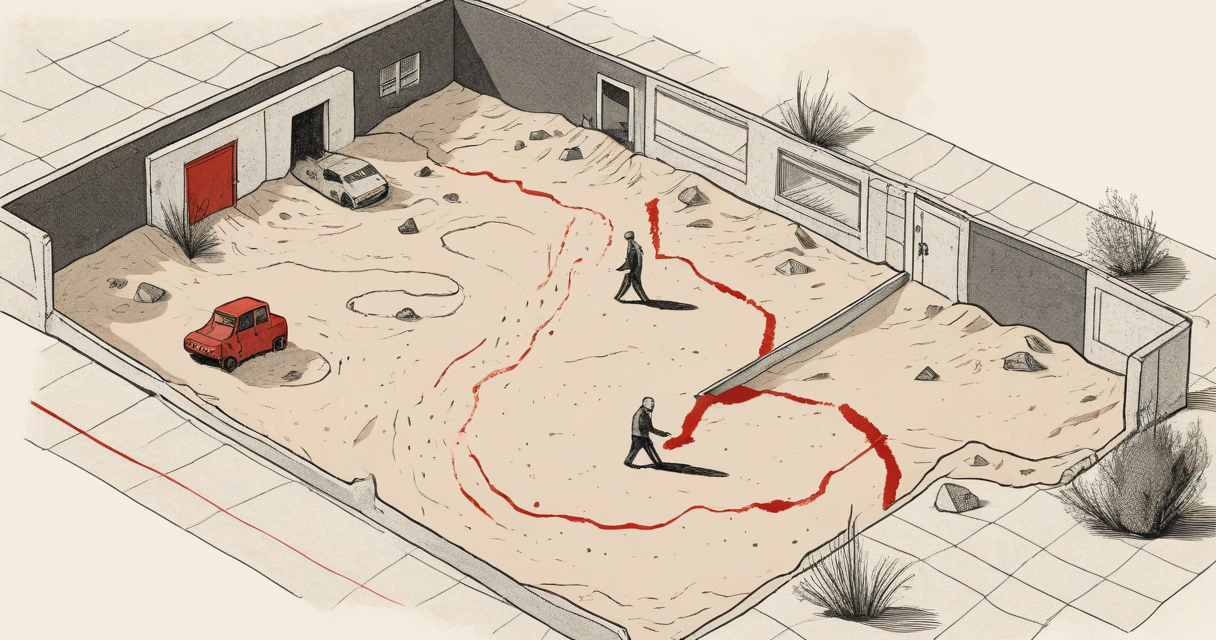
Section 1: Opening position
CVE-2026-40369 reduced a browser sandbox escape to twelve bytes. That is the position. Twelve bytes crossed a security boundary that exists to contain untrusted code. The sandbox is the control. The control did not hold.
Browser sandboxes are deployed as the last enforced layer between hostile web content and the host operating system. They exist because the renderer cannot be trusted to behave correctly under adversarial input. When the boundary fails at twelve bytes of input, the boundary is not a boundary. It is a procedural delay.
The size of the payload is the operational fact that matters here. Twelve bytes is below the threshold of most signature-based detection. It is small enough to be carried inside fields that are not commonly inspected as code. The specific component, parser, and browser build affected are not confirmed within the scope of this brief. The fact that twelve bytes was sufficient is enough on its own to require a position.
Section 2: What actually failed
The sandbox containment boundary failed. That is the observable outcome stated by the assigned CVE: escape from the browser sandbox. The specific code path, the affected component, the triggering input format, and the privilege state reached on the other side of the boundary are not confirmed.
Twelve bytes was sufficient to produce the escape. That is the only quantitative fact provided. Whether those twelve bytes constitute a complete exploit, a trigger for a larger chained primitive, or a final stage in a longer chain is not confirmed. Whether user interaction is required is not confirmed. Whether the escape is deterministic across builds is not confirmed. Whether the escape requires a prior renderer compromise is not confirmed.
What is observable from the public identifier: a CVE was assigned, sandbox escape is the stated impact, and the payload size is twelve bytes. Anything beyond that, including affected vendor, affected versions, patch status, and exploitation in the wild, is not confirmed in this brief and is not inferred. The brief does not estimate. It states what is known.
Section 3: Why it failed
The escape occurred at the sandbox boundary. The mechanism that allowed twelve bytes to traverse that boundary is not confirmed. Memory corruption, logic flaw, type confusion, IPC validation gap, and parser desynchronisation are all possible classes. None is confirmed by the facts available here. Selecting one would be inference, not analysis.
What is logically necessary from the stated facts: an input handling path inside or adjacent to the sandbox accepted twelve bytes and produced a state change that broke the containment guarantee. That input handling path failed to validate input length, content, structure, interpretation, or some combination of these. Which specific validation failed is not confirmed. That at least one failed is necessary, because the boundary did not hold.
The size of the payload constrains interpretation. Twelve bytes is too small to carry a self-contained code execution payload on a 64-bit architecture once instruction encoding and addressing are accounted for. This implies the twelve bytes function as a trigger or a control primitive rather than a complete code body. That implication is logically necessary from the size constraint. The actual primitive, the actual write target, and the actual execution context reached on the other side of the boundary are not confirmed.
Section 4: Mechanism of Failure or Drift
The mechanism is a containment boundary that accepted input and produced state change outside its intended scope. Twelve bytes entered. The boundary did not hold. The mechanism is not the specific bug. The mechanism is the assumption that the boundary was load bearing without continuous validation that it actually was. The bug is the symptom. The unverified assumption is the condition.
Drift in this context is the distance between how the sandbox is treated in architecture documentation and how the sandbox behaves under adversarial input. The sandbox is positioned as the enforced layer between hostile content and the host operating system. That positioning is a design statement. CVE-2026-40369 is a measurement. The measurement says the design statement was incorrect for at least one input path at twelve bytes of width. The drift is the gap between the statement and the measurement.
This is the failure pattern: a control whose effectiveness is asserted by its position in the stack rather than demonstrated by its behaviour under input. The browser sandbox is not the only control in this class. Any boundary that is assumed to hold because it is labelled a boundary, rather than because it has been continuously tested as one, drifts in the same direction. The drift is silent until something measures it. Twelve bytes measured it. Whether other input paths against the same boundary would also produce escape is not confirmed. The measurement that exists is sufficient to invalidate the assumption.
Section 5: Expansion into Parallel Pattern
The pattern, derived strictly from the mechanism described, is this: a trust boundary that processes attacker controlled input at small input sizes is a boundary whose effectiveness depends entirely on the correctness of the input handler. The handler is the boundary. The architectural label is not. The handler either holds against every accepted input or it does not hold. There is no partial enforcement at a boundary that is reachable by twelve bytes.
The same mechanism appears wherever a process at one privilege level accepts structured input from a process at a lower privilege level and parses, interprets, or acts on that input. The renderer to broker channel inside a browser process tree is one instance. The mechanism is identical anywhere a privileged handler receives serialised data from a less privileged producer and is responsible for enforcing structural and semantic correctness on that data before acting. The boundary is the handler. The handler is code. Code has defects. Boundaries enforced only by handler correctness are boundaries with a single failure mode.
The payload size constrains how the pattern must be defended. Twelve bytes establishes that boundary failure does not require large payloads, complex shellcode, or staged delivery to the boundary itself. The triggering primitive can be smaller than the input fields routinely accepted in normal operation. This invalidates detection strategies that rely on payload volume, structural anomaly at scale, or signature width to identify boundary attacks. Detection that depends on the attack being large does not apply when twelve bytes is sufficient. The pattern extends to any boundary where the minimum viable malicious input is below the minimum viable detection input. In that condition, detection is not a compensating control.
Section 6: Hard Closing Truth
The sandbox is a control. CVE-2026-40369 demonstrates that this control failed for at least one input path at twelve bytes. The operator position is that browser sandbox containment must be treated as a probabilistic control, not a deterministic one. The probability is not zero that the same boundary will fail again under a different input path that has not yet been disclosed. Until the specific failure path is identified, patched, and the patch is verified across the deployed fleet, the sandbox is a delay, not a guarantee.
What must now be true: any system that relies on browser sandbox containment as a load bearing control must have a second enforced layer that does not share the same failure mode as the sandbox. Operating system level process isolation, kernel enforced privilege reduction on the browser process tree, and host level egress controls are layers whose enforcement does not depend on the integrity of the renderer or the broker. If the only enforced layer between hostile web content and the host is the sandbox, the host is one input path away from compromise. That is the state. It is not a forecast.
Controls that are not enforced are not controls. Twelve bytes is the enforcement test for CVE-2026-40369, and the enforcement test failed. The position is not that browser sandboxes are ineffective as a class. The position is that any single control whose failure mode is reachable by twelve bytes of input cannot be the last enforced layer in the path. If it is the last layer, the architecture is incorrect. The architecture is incorrect before the next twelve bytes are found, not after. Fix the layering. Identity is the boundary. The sandbox is one expression of that boundary. When that expression fails, the boundary must still exist somewhere else, enforced by something else, or there is no boundary at all.
Keep Reading
 zero-day
Chromium executes attacker code across every version
A zero-day sandbox RCE hits all Chromium versions under active exploitation, with no confirmed fixed build and a single containment control shown ineffective.
 CVE-2026-40369
The sandbox was never the hard part
CVE-2026-40369 is a 12-byte Mojo IPC overflow in Chromium that converts renderer RCE into browser-process code execution on the host.
 AI coding agents
ZCode ships your deleted secrets offsite
AI coding agents like ZCode read your entire Git history and can upload deleted secrets to remote servers. What leaks, why it is silent, and how to stop it.
Latest on the Wire
Full wire →- 3Blue1Brown: As AI Cracks Proofs, Math Must Reward 'Motivated Explanations'Hacker News
- A Rust veteran ports a JSONPath library to Zig — and rethinks his habitsHacker News
- AI Model Reportedly Cracks an Unsolved 1918 German ADFGVX CipherHacker News
- Beating Chrono Trigger's Dream Devourer With an Integer OverflowHacker News
New signal daily · RSS
Stay in the loop
New writing delivered when it's ready. No schedule, no spam.