The storefront went dark by sundown
A merchandise site linked to Kash Patel went dark after allegedly serving malware. Operator breakdown of the control gaps that made takedown the only response.
1. Opening Position
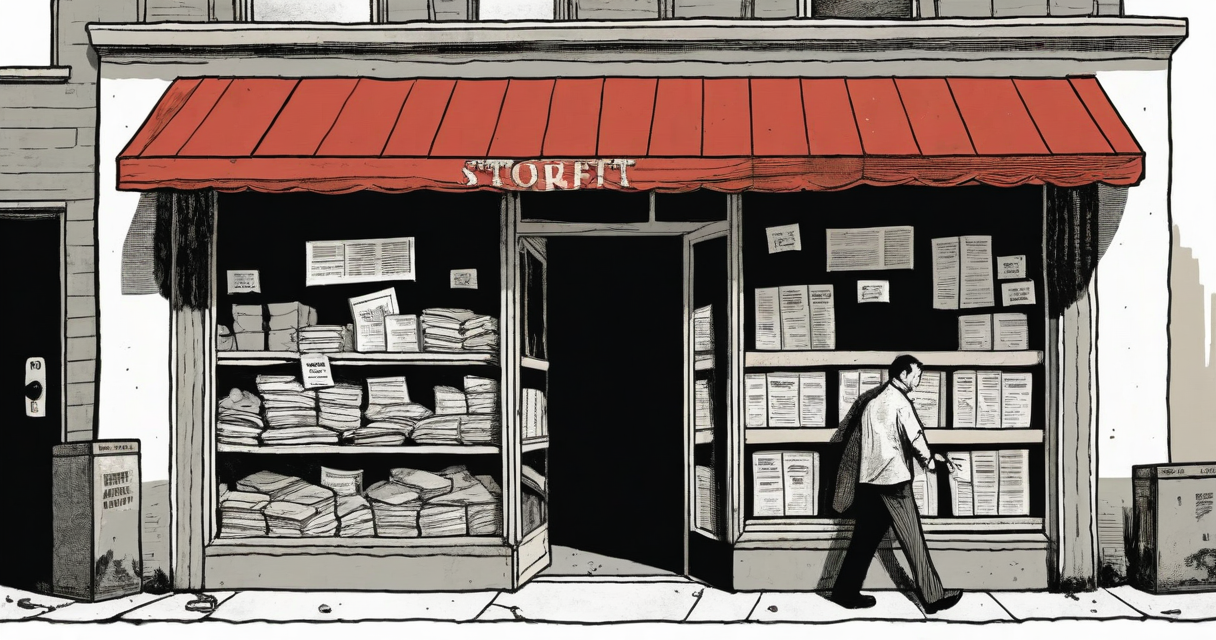
A merchandise site linked to Kash Patel was taken offline following a reported compromise in which the site allegedly delivered malware to visitors. The site is dark. The delivery vector, the payload, the persistence mechanism, and the scope of affected visitors are not confirmed. What is confirmed is that a consumer-facing storefront, operating under the trust signal of a public figure’s name, served something it should not have served, and the operator’s response was to remove the surface entirely.
That response is the position to start from. Taking the site offline is containment. It is not remediation. It tells you the operator did not have a faster control to apply at the application layer, at the CDN layer, or at the content delivery boundary. The decision to pull the entire property indicates that selective takedown of the malicious component was either not possible or not trusted. That is a control posture statement on its own.
The broader signal is the one worth naming directly. A storefront tied to a recognisable identity is a high-trust delivery channel. Visitors do not inspect script tags. They do not validate certificate chains. They click because the name on the door is the name they expect. When that channel ships malicious code, the trust is the delivery mechanism. The brand is the payload carrier. Everything downstream of that point is consequence.
2. What Actually Failed
The externally observable failure is this: a site under the operator’s control returned content to visitors that is alleged to have been malicious. The site is now unreachable. Whether the malicious content was injected into the site’s own served HTML, loaded through a third-party script reference, or delivered via a compromised dependency in the storefront stack is not confirmed. The only externally observable behaviour is that visitors received something harmful and the operator removed the origin.
The second failure is containment scope. The operator did not isolate a component. The operator removed the property. That outcome tells you the boundary between trusted and untrusted content inside the application was not enforceable at a granularity smaller than the whole site. If the malicious code had been confined to a known module, a known script reference, or a known asset path, that element could have been pulled while the rest of the storefront continued to serve. It was not. The blast radius of the response equals the blast radius of the application.
The third failure is visitor-side. Anyone who loaded the site during the window in which malicious content was being served executed that content in their own browser. The duration of that window is not confirmed. The number of affected sessions is not confirmed. The payload behaviour, whether it targeted credentials, session tokens, payment input fields, or browser-level persistence, is not confirmed. What is confirmed is that the trust relationship between visitor and origin was the mechanism that allowed execution. The browser ran the code because the origin said to run it.
3. Why It Failed
Do not describe the failure as a hack in the abstract. Describe it as a control gap. A storefront serving unauthorised content to visitors means one of a small set of conditions was true at the moment of delivery: the origin was modified, the supply chain feeding the origin was modified, or the delivery path between origin and visitor was modified. Which of those conditions applied here is not confirmed. The structural point is that integrity of served content was not continuously validated against an authoritative baseline. If it had been, deviation would have triggered a response faster than the public discovery that forced the takedown.
The second condition is identity and access boundary discipline at the publishing layer. Merchandise sites are operated by small teams, frequently through third-party platforms, with administrative access distributed across operators, developers, marketing staff, and external vendors. Each of those identities is a path to the origin. Whether any of those identities was the entry point in this incident is not confirmed. The pattern is that the number of identities authorised to change served content is almost always larger than the number of identities subject to enforced controls on those changes. That gap is where unauthorised modification happens.
The third condition is third-party execution context. Modern storefronts load analytics, tag managers, payment widgets, chat tools, A/B testing scripts, and pixel trackers. Each of those is code executing in the origin’s trust context. The origin operator typically does not control the code those vendors ship. A compromise of any one of those vendors becomes a compromise of every site that loads them. Whether a third-party dependency was the vector here is not confirmed. The exposure exists by design in the architecture of consumer web storefronts, and removing the site does not remove that exposure. It only removes the surface on which it was visible.
The mechanism is integrity drift at the published surface. A storefront publishes a defined set of assets, scripts, markup, and references. That published set has an authoritative state at the moment of deployment. Drift occurs when the served content diverges from that authoritative state without an authorised change event. In this incident, the served content allegedly diverged. The drift was visible to visitors before it was visible to the operator. That ordering is the failure. Detection arrived through external impact, not internal signal.
Drift at the publishing layer happens through one of three paths. The origin filesystem or database is modified directly by an identity with write access. A referenced third-party asset is modified at its own origin and pulled into the page on next load. A platform-level component, such as a theme, plugin, or tag manager configuration, is modified through an interface that maps back to the same served output. Which of those paths applied here is not confirmed. The mechanism that makes all three possible is the same: served content is treated as authoritative because it is served, not because it is verified. The browser does not ask whether the script it just received matches a known-good hash. It executes what arrived.
The drift is sustained by the absence of a continuous integrity check between the authoritative deployment state and the live served state. Subresource integrity attributes on script and link tags would constrain third-party drift at the browser level. Content Security Policy with strict source allow-lists would constrain injection of unauthorised script origins. File integrity monitoring at the origin would surface direct modification. Whether any of those controls were present here is not confirmed. The observable outcome is that drift reached visitors and ran in their browsers before any control interrupted it. A control that does not interrupt is not a control. It is documentation.
The pattern is not specific to merchandise sites and not specific to public figures. Any consumer-facing web property that loads third-party code, accepts administrative changes from multiple identities, and serves content under a recognised brand name operates with the same exposure profile. The Magecart class of incidents over the last several years established the shape. Attackers do not need to breach the brand to weaponise the brand. They breach a script the brand loads. The script executes in the brand’s origin. The visitor trusts the brand. The payload runs.
The same mechanism applies to any surface where execution context is inherited from a trusted parent. A compromised analytics tag on a checkout page reads payment input. A compromised chat widget on a logged-in dashboard reads session state. A compromised font loader on a marketing site delivers a redirect to a credential harvester. The vector changes. The mechanism does not. Code executing inside a trusted origin inherits the trust of that origin, and the origin operator typically has neither visibility into nor control over the code that third parties ship to it.
The pattern extends to identity boundaries as well. A storefront that grants administrative access to operators, agencies, freelancers, and platform support staff is an identity surface, not a content surface. Each authorised identity is a path to the served output. A compromise of any one of those identities is a compromise of the published content. The brand name on the site does not constrain who can change what the site says. It only constrains who the visitor blames when the site says the wrong thing. That asymmetry is the structural condition. The trust accrues to the brand. The control surface is distributed across parties the brand does not own.
Taking the site offline is not a security outcome. It is an absence of a security outcome. The operator removed the surface because the operator did not have a faster, narrower control to apply. Every consumer-facing property that cannot isolate a compromised component without removing the entire property is in the same posture. The takedown is the tell.
Identity is the boundary. Continuous validation is the requirement. Served content must be verifiable against an authoritative baseline at the moment of delivery, or the served content is not trustworthy regardless of which name is on the door. Third-party code executing in a first-party origin is first-party risk. Administrative identities authorised to change served content are production identities and must be governed as production identities. None of this is theoretical. It is the operating condition of every site that ships code to a browser.
The specific scope, payload, dwell, and impact of this incident are not confirmed. The structural lesson does not depend on those details. A trusted brand served untrusted code, the visitors executed it, and the only available containment was to disappear. Build the controls that make a narrower response possible, or accept that the next incident ends the same way.
See also: NordVPN for tunneled traffic when operating outside controlled networks.
#ad Contains an affiliate link.
Keep Reading
 AI security
Three filled lines in the HuggingFace postmortem
A HuggingFace hack postmortem by METR and Redwood confirms only authorship, subject, and focus. Mechanism is not confirmed, so no control change is authorized.
 incident response
Absence is not proof
Vancouver PD's Quick Escape button erases its own browser-history record on execution, leaving a control that cannot be verified or reconstructed.
 third-party risk
Alibaba moves to ban Claude Code over backdoor risk
A reported ban on a widely-used AI development tool reframes third-party AI access as a board-level exposure most organizations have not measured.
Latest on the Wire
Full wire →- 3Blue1Brown: As AI Cracks Proofs, Math Must Reward 'Motivated Explanations'Hacker News
- A Rust veteran ports a JSONPath library to Zig — and rethinks his habitsHacker News
- AI Model Reportedly Cracks an Unsolved 1918 German ADFGVX CipherHacker News
- Beating Chrono Trigger's Dream Devourer With an Integer OverflowHacker News
New signal daily · RSS
Stay in the loop
New writing delivered when it's ready. No schedule, no spam.