Russian hands on Polish water valves
A board-level read on Russian-linked activity against Polish water utilities and what it means for directors governing critical services.
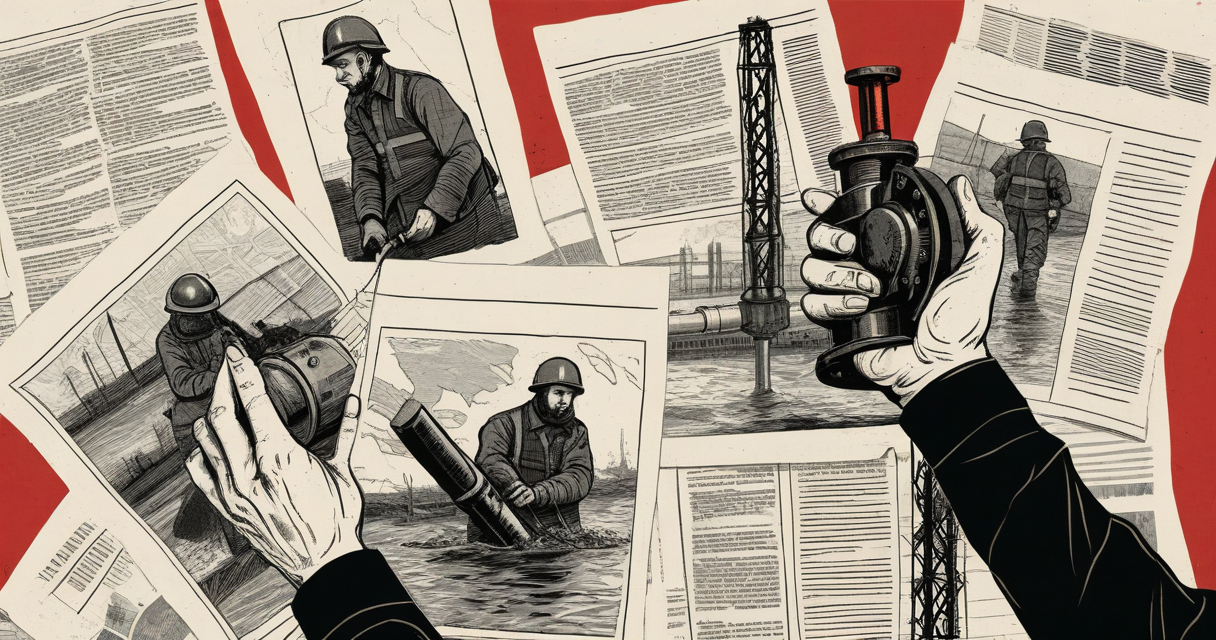
Russian-linked intrusions targeting Polish water utilities have been reported publicly. The specific systems affected, the duration of access, the number of facilities involved, and the operational consequences are not confirmed in the facts available. What is established is that critical infrastructure tied to civilian water supply has been named as a target of state-aligned activity in a country bordering an active conflict. That alone is the material point for any board with operational, regulatory, or reputational exposure to essential services. The relevance is not the technical character of the activity. The relevance is that a category of asset previously treated as background infrastructure is now being treated by adversaries as a pressure surface against a population.
The outcome indicates that water utilities are being engaged as instruments of coercion rather than as objects of espionage. When critical services are touched in a way that becomes publicly known, the effect on civilian confidence is achieved regardless of whether physical disruption occurred. The consequence sits in two registers at once: the operational register, which concerns whether service was interrupted, and the psychological register, which concerns whether the public can continue to assume that essential services are uncontested. The second register does not require a successful technical outcome to produce damage. Visibility of the attempt is sufficient.
For a board, this reframes the question. The exposure is no longer limited to the integrity of a control system. The exposure extends to public trust, regulatory standing, and the organisation’s position within a national security posture it did not choose to enter. Directors of any operator of essential services should treat the Polish reporting as a confirmed signal that the threat model has shifted from opportunistic and criminal to deliberate and political, with civilian impact as the intended product rather than a side effect.
The prevailing assumption inside many essential-service operators has been that critical infrastructure is defended by a combination of obscurity, segmentation, and the absence of commercial value to attackers. Under that assumption, water, wastewater, and similar utilities were treated as lower-priority targets relative to financial services, healthcare records, or intellectual property. Investment patterns, board reporting cycles, and incident exercises have historically reflected that ranking. The assumption was that adversaries who could reach these systems would have no reason to act on them.
A second assumption has been that the boundary between information technology and operational technology functions as a meaningful control at runtime. Boards have been told for years that these environments are separated, that access to one does not imply access to the other, and that monitoring covers the seams. The Polish reporting does not, on the facts provided, describe the specific access paths used. What it does establish is that the assumption of separation is now being tested in public by actors whose objective is to demonstrate reach rather than to extract value.
The third assumption, and the most consequential for governance, has been that the threat to civilian infrastructure remains theoretical outside of declared conflict zones. That assumption has framed risk appetite, insurance posture, and the willingness to fund resilience work that has no near-term revenue case. The activity against Polish utilities, taking place outside the territory of the active conflict but within its political perimeter, indicates that the boundary directors have been relying on is not where they thought it was. Exposure is defined by the adversary’s reach, not by the organisation’s self-description of where it operates.
What has changed is the purpose of the intrusion. The outcome indicates that civilian infrastructure is now being used to produce fear as a deliberate effect, distinct from disruption and distinct from intelligence collection. The product the adversary is generating is public awareness that essential services are reachable. This changes the calculation for the operator, because the adversary’s success condition no longer requires sustained access or destructive action. A visible touch, attributed or attributable to a state-aligned actor, is sufficient to deliver the intended outcome against the population the operator serves.
What has also changed is the audience for the event. Previously, a security incident at a utility was a matter between the operator, its regulator, and its insurer. The Polish reporting demonstrates that incidents of this type are now consumed by national governments, allied governments, media, and the civilian public as evidence of hybrid pressure. The board’s exposure is therefore no longer bounded by the operational footprint of the organisation. It extends to the organisation’s role as a visible indicator of national resilience, whether or not the organisation accepted that role.
Finally, what has changed is the standard against which controls will be judged. Previously, the question was whether controls existed and were documented. The question now is whether controls functioned at runtime against an adversary willing to expend state-level resources for a psychological return. The facts available do not confirm which controls were tested, which held, or which did not. What can be stated is that the threshold for credible defence has moved, and that the absence of confirmed impact in any single reported event should not be read as confirmation that controls performed. Absence of evidence is not evidence of absence.
Phase 1 contains one mildly advisory line directing how directors should treat the Polish reporting. The remainder is observational and within fact. Phase 2 will hold to descriptive risk language and avoid prescriptive instruction.
The drift that produced the current position was not a single decision. It was the accumulation of reasonable choices made under an earlier threat model and never re-examined as that model aged. Capital was allocated against the risks that were measured, and the risks that were measured were the ones that had historically produced loss. Civilian infrastructure as a coercive target did not appear in those loss histories with material frequency, so it did not compete successfully for funding, attention, or board time. The result is a control environment shaped by the threats of the previous decade rather than the threats of the present one.
A second mechanism is the gap between policy and enforcement. Boards have been receiving assurance for years in the form of frameworks adopted, certifications held, and exercises completed. The Polish reporting does not, on the facts available, confirm which controls were engaged or how they performed. What it does establish is that the adequacy of any control regime is measured by what the system permits at runtime, not by what the policy describes. Where assurance has been treated as the output of an audit rather than the output of an adversarial test, the distance between stated posture and actual posture is unknown to the board until an event makes it visible.
A third mechanism is the treatment of identity and access boundaries inside operational environments as a steady-state condition rather than as a continuously contested one. Access that was scoped correctly at the point of provisioning may not remain scoped correctly under change, vendor turnover, integration work, or remote support arrangements. The facts available do not describe the access paths used against Polish utilities. What can be stated is that access defines exposure, and that the integrity of access boundaries inside essential-service environments cannot be assumed from their existence on a diagram. The boundary exists only where it is enforced under live conditions against a motivated actor.
The pattern visible in the Polish reporting is not confined to water. The same logic applies to any service whose interruption, or visible touching, produces civilian effect disproportionate to the technical event. Power distribution, district heating, transport signalling, municipal communications, and wastewater all sit within the same category: assets whose value to a state-aligned adversary is measured in public reaction rather than in extracted data. Boards governing any of these services should understand that the targeting rationale demonstrated in Poland is portable, and that the absence of reporting against a given sector is not evidence that the sector is outside the adversary’s target set.
The parallel extends to private operators of services that are not formally designated as critical but that function as critical in practice. Payment rails, food distribution, fuel logistics, and large-scale healthcare delivery produce civilian effect at a scale comparable to designated infrastructure. The legal designation determines regulatory obligation. It does not determine adversary interest. Where an operator’s interruption would produce visible public consequence, the operator is exposed to the same category of activity regardless of how its sector is classified in national frameworks. Directors should not infer protection from the absence of a designation.
The pattern also extends across geography. The Polish reporting concerns infrastructure outside the territory of the active conflict but within its political perimeter. Operators in jurisdictions that consider themselves geographically removed should examine whether their political alignment, supply relationships, or symbolic value place them inside a perimeter they have not formally acknowledged. Exposure is defined by the adversary’s reach and rationale, not by the operator’s self-assessment of its distance from the conflict. The relevant question for any board is not whether the organisation considers itself a target, but whether an adversary pursuing psychological return against a population could find utility in touching it.
The hard position is this. Critical and quasi-critical service operators are now inside a threat environment in which a category of state-aligned adversary is willing to expend resources to produce civilian fear, and in which the success condition for that adversary does not require sustained access, exfiltration, or destruction. Visibility of reach is sufficient. This changes the meaning of every control claim a board has previously accepted, because controls that were sized against criminal or opportunistic threats were not sized against this one. The facts available from Poland do not confirm what was lost. They confirm that the threshold has moved.
The second hard position is that the absence of a confirmed impact in any single event reported to a board is not assurance. The adversary’s product in this category is the report itself. An operator that has not been named is not, on that basis, outside the target set. An operator that has been touched without confirmed disruption has still contributed to the adversary’s intended outcome if the activity becomes public. Directors who continue to treat reported incidents as the only measurable signal will be governing against a definition of harm the adversary has already moved past.
The final position is that exposure in this environment is no longer a property the organisation owns in isolation. It is shared with the state, with the population the service reaches, and with the political context the operator did not author. The board’s accountability has widened accordingly. The duration, scope, and consequence of the activity reported against Polish water utilities remain unconfirmed on the facts available. What is confirmed is that civilian infrastructure has been named as a pressure surface, and that any board governing such a surface is now answerable for whether its controls function at runtime against an adversary whose objective is fear. Credibility, from this point forward, will be measured by enforcement, not by description.
Keep Reading
 board governance
Unverified claim names Tesla as attack source
When a cyberattack claim names a high-profile company like Tesla, the unverified attribution itself becomes the board's primary exposure.
 board governance
The boundary no longer holds
A board-level brief on CVE-2026-40369, the twelve-byte browser sandbox escape, and the control assumptions senior leadership must now revisit.
 board governance
Your MFA assurance just expired
A board-level position on AI-developed 2FA bypass: reduced authentication assurance, category-level exposure, and the conditions required going forward.
Latest on the Wire
Full wire →- 3Blue1Brown: As AI Cracks Proofs, Math Must Reward 'Motivated Explanations'Hacker News
- A Rust veteran ports a JSONPath library to Zig — and rethinks his habitsHacker News
- AI Model Reportedly Cracks an Unsolved 1918 German ADFGVX CipherHacker News
- Beating Chrono Trigger's Dream Devourer With an Integer OverflowHacker News
New signal daily · RSS
Stay in the loop
New writing delivered when it's ready. No schedule, no spam.