FaceTec stores non-rotatable identity material
A senior operator's position on the storage of non-rotatable biometric templates by ID verification vendors, and the exposure that condition creates.
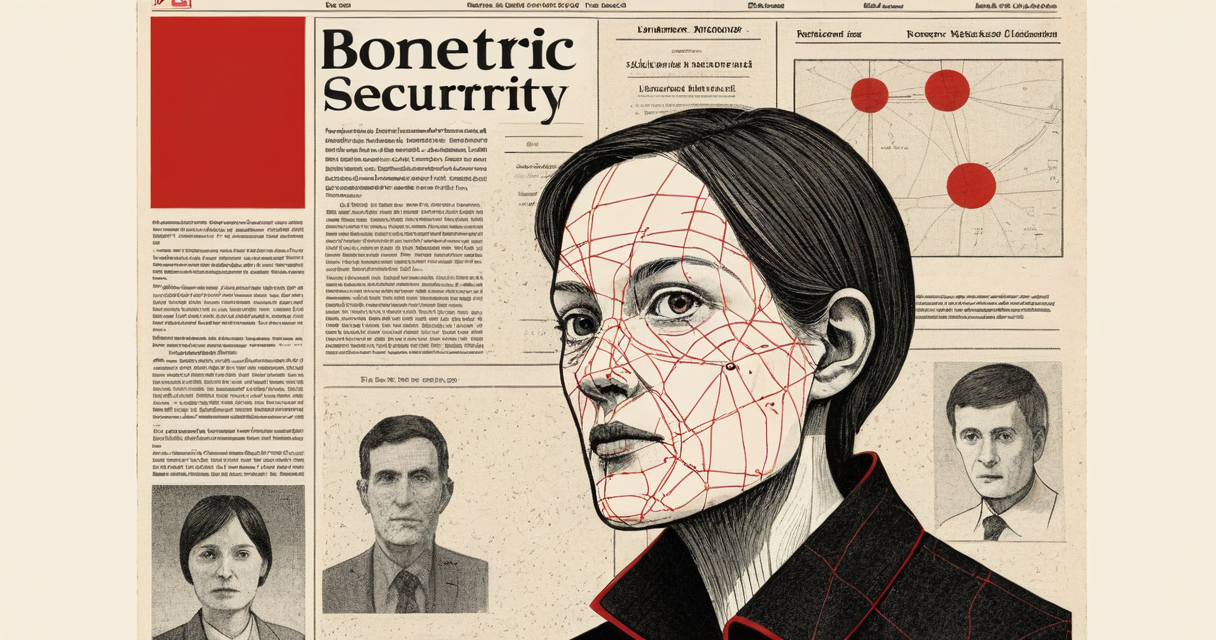
1. Opening Position
FaceTec is an identity verification vendor. The topic states this vendor stores user biometrics. Beyond that, no breach, no exposure event, and no specific vulnerability against this vendor is confirmed in the input. What follows is a position on the architectural condition itself, not an incident response.
The condition is this. A third party holds biometric data tied to verified human identities. That data is not rotatable. A password can be reset. A token can be revoked. A face cannot. Once the underlying biometric template is exposed, the identity binding it represents is permanently degraded for every system that trusts that biometric as proof of presence.
This is the operator framing. Storage of non-rotatable identity material concentrates risk in a single trust boundary. The control question is not whether the vendor is competent. The control question is whether the design assumes the vendor will never be compromised. If the answer is yes, the design is ineffective by definition. Controls that depend on the indefinite security of a third party are not controls. They are assumptions.
2. What Actually Failed
Nothing in the provided facts confirms a failure event against FaceTec. No breach, no leaked dataset, no exploitation chain, and no specific vulnerability is stated. Any claim to the contrary would be fabrication. That status is the starting point, and it is held without modification.
What is observable from the stated condition is the storage decision itself. User biometrics are retained by the verification provider. That is the fact. The retention turns a verification function into a custodial function. A system that only needed to confirm a match at a point in time now holds the reference material indefinitely. The boundary between verification and storage has been crossed. That is a design choice with downstream consequences regardless of whether a compromise has occurred.
What is not confirmed is equally important. The encryption posture of the stored biometrics is not confirmed. The key management model is not confirmed. The access path from operator personnel, support staff, or integrated customers to the biometric store is not confirmed. The retention period is not confirmed. The deletion guarantees on customer offboarding are not confirmed. The jurisdictions in which copies exist are not confirmed. Each of these is a control surface. Absence of stated control is not presence of control. It is unknown exposure.
3. Why It Failed
No specific failure is confirmed, so this section addresses why the storage model itself produces structural exposure independent of any single incident. The mechanism is identity binding. A biometric template is a mathematical representation of a body. Once that representation is captured and stored, the body it represents becomes the credential. The credential cannot be changed without surgery. That is the property that makes biometric storage different from any other credential storage decision.
The enforcement gap is the gap between liveness detection at capture and trust in stored templates at later use. Liveness detection, where present, addresses the moment of enrolment or re-verification. It does not address what happens to the template after storage. If a stored template is extracted, the question of whether the original capture was live becomes irrelevant to any downstream system that accepts the template, a derived match score, or a signed assertion based on it. The control that protected the front door does not protect the warehouse. That is not a vendor-specific claim. It is a property of the architecture.
The trust relationship compounds this. Every customer that integrates with a centralised biometric verifier inherits the verifier’s security posture as a hard dependency. The customer cannot inspect it continuously. The customer cannot rotate the underlying secret if the verifier is compromised. The customer’s only available response to a verifier compromise is to stop trusting biometric assertions from that verifier, which is the same as removing the control. Identity is the boundary. When the boundary is held by a third party and the material defining it cannot be reissued, the trust relationship is asymmetric and the customer carries residual risk that no contractual term resolves.
The mechanism is custodianship of non-rotatable material. Verification, narrowly defined, requires a reference at the moment of comparison and nothing afterward. Storage extends that moment indefinitely. The extension is the drift. A system designed to answer whether a presented face matches an enrolment becomes a system that holds the enrolment. Those are different operational postures with different risk surfaces. The second is not a property of the verification problem. It is a property of the implementation decision.
The drift compounds at the boundary between the vendor and its integrators. Each integrator relying on stored templates inherits a control surface they cannot inspect, cannot replicate locally, and cannot rotate. The vendor’s internal access model, whatever its shape, is not visible to the integrator. The integrator’s only available signal for control effectiveness is the absence of a public incident. Absence of incident is not evidence of control. It is evidence of silence. Silence is not a control state.
The second mechanism is template permanence. A captured biometric template is a function of a body. The function may differ across vendors, algorithm versions, and enrolment sessions, but the body does not. If a stored template is extracted, inverted, or transferred to a parallel system that accepts the same modality, the underlying identity is exposed in a way the original holder cannot undo. The subject cannot issue a new face. The integrator cannot issue a new face. The vendor cannot issue a new face. The credential is the human, and the human is fixed. Every protection decision downstream of that fact inherits it.
The same mechanism appears wherever a third party holds identifiers the subject cannot reissue. Credit bureaus hold government-issued numeric identifiers across populations. Those identifiers are not rotatable by the individual. When such a custodian is compromised, the affected population does not regain the ability to revoke the identifier. They retain a degraded credential while every downstream system continues to treat that credential as proof. The mechanism is identical. Central storage of material the subject cannot rotate produces durable, population-scale exposure on any compromise.
The same mechanism appears in centralised root key storage where private material is bound to a long-lived identity rather than a short-lived session. A root that cannot be rotated without cascading invalidation is functionally equivalent to a biometric template in this respect. The custodian carries asymmetric risk because the cost of compromise is borne by every relying party, while the cost of prevention is borne only by the custodian. The economic asymmetry produces predictable under-investment in protection relative to aggregate exposure. The integrator does not see the gap until it has already been crossed.
The pattern generalises to any architecture where verification is implemented as custody. The shape is consistent. Capture once. Store. Compare against the stored copy on every subsequent transaction. The store becomes a high-value target proportional to the population it represents and the durability of the material it holds. The defender’s cost scales linearly with the population. The attacker’s payoff scales with the same population. Asymmetry favours the attacker because a single successful extraction monetises across the entire dataset, while a single defensive failure exposes the entire dataset. This is not a vendor problem. It is a topology problem.
The operator position is that biometric verification should be designed so the compromise of any single party does not degrade identity for the population it serves. That requires architectures in which reference material does not leave the subject’s control, matching produces ephemeral assertions rather than reusable tokens, and the relying party validates assertions against a key the subject can rotate. The closer a design moves toward central custody of non-rotatable material, the further it moves from this position. The FaceTec storage condition, as stated, sits on the custody side of that line. That is the architectural fact. Nothing about vendor competence changes it.
For integrators, the operative question is not whether the vendor is trustworthy today. The operative question is what the integrator does the day the vendor is compromised. If the answer is to stop accepting biometric assertions from that vendor and absorb the operational consequence, the integrator has a control. If the answer is to rely on the vendor’s incident response and continue trusting issued credentials, the integrator has no control. The first answer requires that biometric verification be one factor in a composite, never the binding itself. The second answer requires faith. Faith is not a control.
For the individual, the only durable position is to limit the number of custodians holding a copy of the same biometric modality and to treat each held copy as permanent. There is no recall mechanism. There is no rotation path. Anyone whose face is stored in a third-party verification system should treat that storage as a one-way commitment for the life of the face. That is not advice. That is the architectural reality of the storage decision. Controls that depend on the indefinite security of a third party are not controls. Storage of non-rotatable identity material is the boundary that defines every dependency downstream of it.
See also: NordVPN for tunneled traffic when operating outside controlled networks.
#ad Contains an affiliate link.
Keep Reading
 supply-chain-security
No one hacked the NSA
The NSA's Mythos access loss wasn't a breach - it was a control-plane revocation by a third party. A supply chain availability failure with no patch.
 third-party-risk
What a tool does never made it safe
When ownership of an integrated, data-access tool changes, existing access persists under a new identity unless it is revoked and re-issued.
 AI coding agents
ZCode ships your deleted secrets offsite
AI coding agents like ZCode read your entire Git history and can upload deleted secrets to remote servers. What leaks, why it is silent, and how to stop it.
Latest on the Wire
Full wire →- 3Blue1Brown: As AI Cracks Proofs, Math Must Reward 'Motivated Explanations'Hacker News
- A Rust veteran ports a JSONPath library to Zig — and rethinks his habitsHacker News
- AI Model Reportedly Cracks an Unsolved 1918 German ADFGVX CipherHacker News
- Beating Chrono Trigger's Dream Devourer With an Integer OverflowHacker News
New signal daily · RSS
Stay in the loop
New writing delivered when it's ready. No schedule, no spam.