Face ID was never the control
A reported Face ID bypass via avatar collapses the liveness assumption. Every downstream control trusting the boolean inherits the failure.
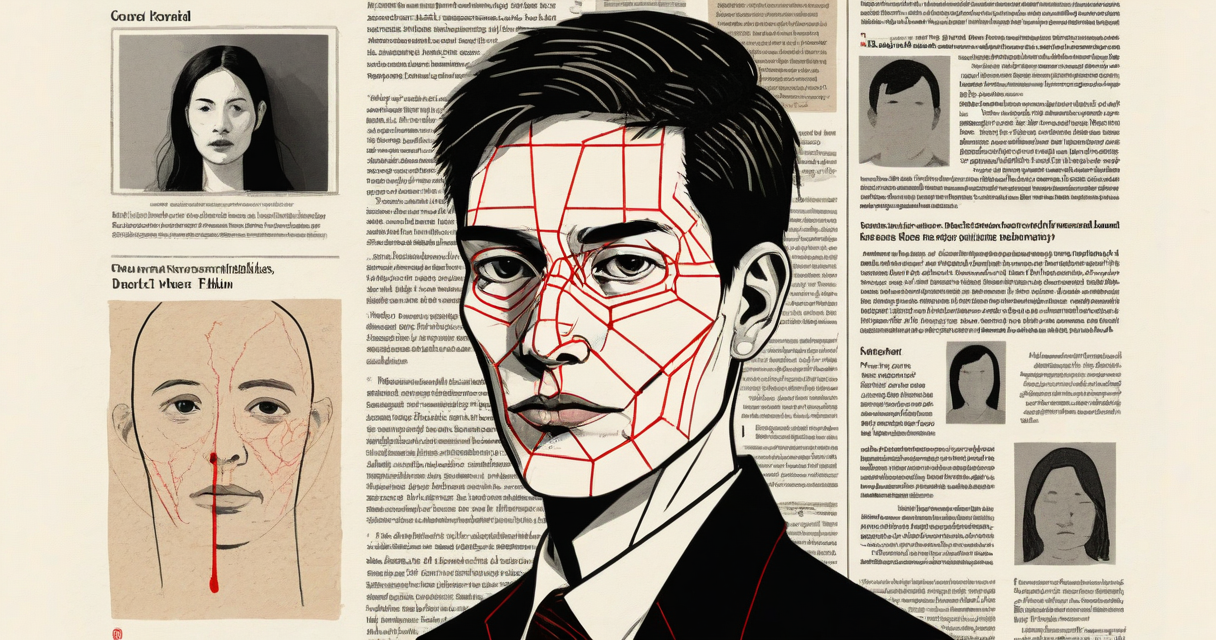
A Face ID bypass involving an avatar has been reported. The specifics of the device model, operating system version, avatar construction method, capture environment, and reproduction reliability are not confirmed. What is confirmed by the claim itself is the failure category. A biometric authentication gate accepted a synthetic facial representation in place of a live human face. That single fact is sufficient to define exposure.
Face ID is positioned as an identity boundary. It is not a convenience feature. It gates device unlock, payment authorisation, password manager access, banking step-up, and on enterprise managed devices it feeds conditional access decisions. If the gate accepts a non-biological input as a valid identity, every downstream control that trusts that gate inherits the failure. The blast radius of a biometric bypass is not the sensor. It is every system that treats a Face ID success as proof of live, authorised user presence.
Treat this as a control effectiveness event, not a novelty. The operational question is not whether the bypass is technically interesting. The operational question is which production authorisation decisions are currently being made on the assumption that a Face ID success equals a live enrolled user. Those decisions need to be enumerated before mitigation is scoped, because the controls layered above the sensor are the controls actually exposed.
Face ID was designed against three stated properties: depth, liveness, and attention. The system uses structured infrared illumination to construct a depth map of the subject, rejects flat two dimensional representations, and requires the user’s eyes to be open and directed at the device. The design assumption is that satisfying all three properties in combination constitutes sufficient evidence that a real, conscious, present human is in front of the sensor. The boundary is the sensor. The check is the combined model. The output is a one bit answer.
The trust chain built on top of that one bit answer is broad. Operating system unlock consumes it. Application developers consume it through the LocalAuthentication API and treat a success as a binding of the current session to the enrolled user. Payment networks consume it as a cardholder verification method. Enterprise mobility management consumes it as a possession plus inherence factor. None of those consumers reverify the input. They accept the boolean and proceed.
That is the architecture under examination. A single biometric check, performed once, with no continuous validation, feeding many high value authorisation paths. The implicit assumption across every consumer of that boolean is that the synthetic input space is out of scope. The depth, liveness, and attention model is presumed to compress the attacker’s options down to physically presenting the enrolled user in front of the sensor. Everything above the sensor is built on that compression holding.
The reported condition is that an avatar produced a successful Face ID authentication. The avatar’s construction method, fidelity, motion source, the medium through which it was presented to the sensor, and whether each of attention, liveness, and depth were independently satisfied or independently bypassed are not confirmed. What is confirmed is the class of input. A synthetic facial representation, not a biological face, was accepted by a system whose stated design rejects synthetic facial representations.
This collapses the original assumption. Depth, liveness, and attention were treated as a combined gate that synthetic input could not satisfy. If synthetic input satisfied the gate, then either the depth model accepted a constructed surface, the liveness model accepted reproduced behaviour, or the attention model accepted reproduced gaze, or some combination of the three failed together. Which specific component failed is not confirmed. That the system failed as a system is confirmed by the outcome. A control that does not stop the behaviour it is designed to stop is ineffective for that behaviour.
The operational implication does not depend on identifying which component failed. The implication is that the input domain Face ID rejects is demonstrably smaller than its design claim. Any control that consumes Face ID success as proof of live user presence is operating on a stale threat model. The prior model placed synthetic input outside the relevant input space. Synthetic input is now inside it. Controls designed against the prior model need to be reassessed against the current input space, not the one that was assumed when those controls were approved.
The stated mechanism is narrow. A synthetic facial representation was presented to the sensor and the sensor’s combined depth, liveness, and attention model returned a positive authentication result. The system performed its check. The check returned true. The input was not biological. Which of the three component models accepted the input, or whether all three accepted it together, is not confirmed. The failure is observable only at the output. The sensor said yes to a face that was not a face.
The drift is in the gap between the design claim and the demonstrated input space. The design treats the synthetic input class as out of scope on the assumption that constructing depth, motion, and gaze that satisfy the model simultaneously is not practical. The avatar result demonstrates that the assumption no longer holds for at least one construction path. The size of that path, the cost of reproducing it, and whether it generalises across devices or enrolments are not confirmed. What is confirmed is that the rejection set claimed by the design is larger than the rejection set the system actually enforces. The difference between those two sets is the exposure.
This is a control enforcement failure, not a policy failure. The policy is correct. Synthetic input should not authenticate. The enforcement returned the wrong answer. Every consumer of the Face ID boolean was written against the policy, not against the enforcement. The LocalAuthentication API does not return a confidence score, a liveness sub-result, or an input class label. It returns success or failure. Consumers cannot distinguish a biological authentication from a synthetic authentication that the sensor incorrectly accepted, because the sensor does not expose that distinction. The failure is invisible to everything above it.
The pattern is a one-shot inference treated as a durable truth by every system downstream. The sensor runs once, returns a boolean, and that boolean is consumed as proof of live enrolled user presence by operating system unlock, payment authorisation, password vault release, and any application calling the platform biometric API. None of those consumers re-run the check. None of them validate the input class. The single inference becomes the identity assertion for the session, the transaction, or the unlock event. When the inference is wrong, every consumer is wrong in the same direction at the same time.
The same mechanism appears wherever a probabilistic check is consumed as a binary fact. Voice authentication gates that return a match boolean to a banking IVR consume a model output the same way. Behavioural biometrics that score a session and pass a threshold to a fraud engine consume a model output the same way. In each case the consumer treats the gate as a wall. The gate is a classifier. Classifiers have an input space the designer modelled and an input space the attacker actually uses. When those two spaces diverge, every system that trusted the boolean inherits the divergence without knowing it occurred.
The consequence of the pattern is that mitigation cannot be located only at the sensor. The sensor will be updated or it will not. The consumers will still be calling an API that returns a boolean. The architectural exposure is the absence of any layer between the sensor and the authorisation decision that can independently verify the assertion the sensor made. High value actions authorised on a single biometric result have no second control to fall back on when the first control is wrong. The bypass does not need to be cheap or repeatable to matter. It needs to exist once for the trust model above the sensor to require revision.
Face ID accepted an avatar. The class of input the system claims to reject was demonstrated inside the class of input the system accepts. The depth, liveness, and attention model is not the boundary it is documented as. Treat the boolean it returns as a probabilistic signal, not as proof of live enrolled user presence. Any control that requires proof of live enrolled user presence and consumes only that boolean is currently underspecified.
Identity is the boundary. A biometric result is one signal contributing to an identity assertion. It is not the assertion. Systems that elevated it to the assertion did so on the strength of the rejection set the sensor claimed to enforce. That rejection set is smaller than claimed. High value authorisations, payment confirmation, vault unlock, conditional access decisions, step-up to sensitive actions, must require a second independently sourced factor that is not derived from the same sensor output. A second factor that depends on the same boolean is not a second factor.
Controls that are not enforced are not controls. A liveness check that accepts a synthetic face is not a liveness check for that input. State it in those terms when scoping the response. Do not describe the bypass as edge case behaviour. Describe it as the current behaviour of the control until the vendor confirms otherwise. Until that confirmation exists, the operational posture is that Face ID success is evidence, not proof, and any decision currently treating it as proof is the decision that needs to change.
Keep Reading
 identity governance
Every Windows laptop carries a tag you can't reach
A board-level analysis of the persistent Windows device identifier as an identity exposure that sits outside enterprise control and must be re-evaluated.
 board risk
Exposure you cannot see
A board-level assessment of why unverified detection against a public vulnerability campaign leaves exposure unconfirmed and control unproven.
 board risk
Gizmodo's front door now hands visitors malware
Gizmodo's homepage delivered a ClickFix attack at runtime, showing how unenforced content delivery controls turn a trusted brand surface into a delivery point.
Latest on the Wire
Full wire →- 3Blue1Brown: As AI Cracks Proofs, Math Must Reward 'Motivated Explanations'Hacker News
- A Rust veteran ports a JSONPath library to Zig — and rethinks his habitsHacker News
- AI Model Reportedly Cracks an Unsolved 1918 German ADFGVX CipherHacker News
- Beating Chrono Trigger's Dream Devourer With an Integer OverflowHacker News
New signal daily · RSS
Stay in the loop
New writing delivered when it's ready. No schedule, no spam.