Baby monitors exposed one million streams
One million baby monitors and cameras were viewable by unauthorised parties. What it reveals about IoT enforcement and the owner-side blindness behind it.
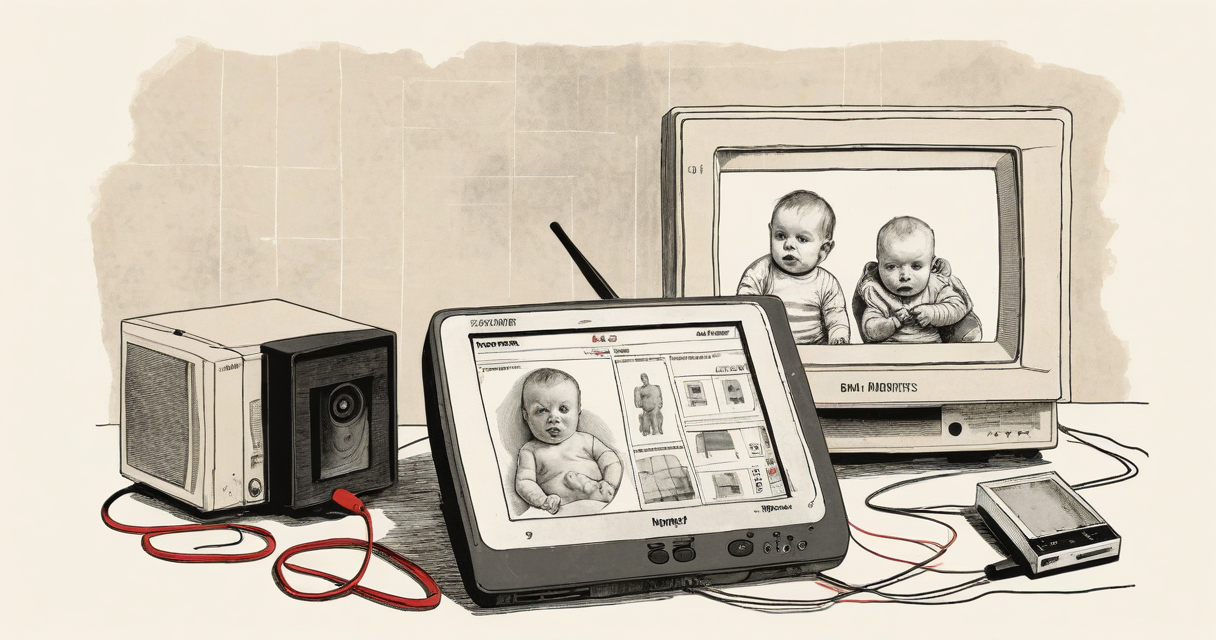
One million baby monitors and security cameras were viewable by unauthorised parties. That is the reported exposure. The specific manufacturer, firmware version, geographic distribution, and the duration of the exposure window are not confirmed in the input. The mechanism that produced the viewability is not confirmed. Treat each of those gaps as a condition, not a detail to fill in.
The number alone defines the operating reality. A device class purchased to monitor children and physical premises produced one million live or recorded video endpoints reachable by someone who was not the owner. The exposure was not theoretical. It was viewable. That word matters. Viewable means the access control intended to restrict the video stream did not restrict it. The boundary between owner and outsider collapsed at scale.
This is not a story about hacker sophistication. The qualifier in the report is “easily.” Effort was low. Skill threshold was low. The attacker class capable of reaching these streams is therefore broad, not narrow. When the access cost drops to easy, the population of potential viewers expands to anyone with the inclination. That is the condition the owners of these devices are now in. The specific count of actual viewers is not confirmed. The condition of exposure is.
The purchasing assumption behind a consumer baby monitor or home camera is simple. The owner sees the stream. No one else does. The device, the app, and any cloud component that sits between them are assumed to enforce that boundary. The owner did not contract for a public broadcast. They contracted for a private feed. That assumption is the entire product.
The assumption depends on identity being the access boundary. The owner authenticates. The stream is bound to that identity. Anyone without that identity is denied. This is the control the buyer believed they were paying for. Whether that control was designed, implemented, or enforced in the affected devices is not confirmed by the input. What is confirmed is that the outcome the control was supposed to produce did not occur for one million devices.
The second assumption is that the vendor is responsible for the boundary. The owner does not see the firmware. The owner does not see the cloud relay. The owner sees an app, a login, and a video feed. Trust is delegated upward to the vendor by default. The owner cannot validate enforcement. They can only observe the absence of strangers in the feed, which is not a signal of control effectiveness. It is a signal that no stranger has shown themselves yet.
The condition that changed is observability. One million devices were reported as viewable. Before the report, the owners of those devices had no signal that the boundary had failed. After the report, the failure is a known state. The devices themselves did not change. The exposure did not begin at the moment of disclosure. The reporting changed. Treat the prior period as undefined rather than safe. Whether the exposure existed before the report is not confirmed in duration, but the exposure is confirmed in fact.
What this changes for the operator perspective is the classification of the device. A camera that can be viewed by an unauthorised party is not a security camera. It is a surveillance endpoint operating against its owner. The label on the box does not determine the function. The enforced behaviour determines the function. When the enforced behaviour is open viewability, the device’s role in the home network must be reassessed against that reality, not against the marketing description.
The second shift is in the trust model around consumer IoT as a category. The disclosure does not name every vendor in the category, and the input does not extend the finding beyond the reported population. The implication that is logically necessary is narrower and harder. A product class that produced one million simultaneously exposed endpoints has demonstrated that the control which the entire purchasing assumption rests on can fail at population scale without the owners knowing. Any device in the home that relies on the same trust model, owner authenticates, vendor enforces, stream stays private, is now operating under an assumption that has been shown to be unverifiable from the owner’s side. Whether other devices share the same defect is not confirmed. The condition that the owner cannot tell is.
The mechanism that produced the viewability is not confirmed. What is logically necessary from the reported facts is the layer at which the failure occurred. One million endpoints reachable by unauthorised parties, with low effort, is not the result of one million independent owner mistakes. Independent owner errors do not converge on identical outcomes at population scale. The failure therefore sits in a layer shared across the affected devices. Whether that layer is firmware, a cloud relay, an authentication path, or an identifier scheme common to the product class is not confirmed.
What can be stated is that the access control intended to restrict the stream did not enforce. Enforcement is not the existence of a login screen. Enforcement is the system denying access to anyone who is not the bound owner, under every reachable path. If the stream was viewable by unauthorised parties at the reported scale, the denial did not occur on at least one reachable path. The number of paths affected, and whether the affected path was authentication, authorisation, or transport, is not confirmed.
The drift is in the gap between the owner’s mental model and the system’s actual behaviour. The owner believed authentication produced privacy. The system, at the reported scale, produced a viewable stream without that authentication being the binding factor. That gap is the failure condition. It does not require sophistication to exploit because the system was not enforcing the boundary the owner assumed. Calling this a vulnerability understates the structural issue. A vulnerability suggests a flaw in an otherwise working control. The reported outcome is consistent with the control not being the binding factor in the first place. Which of these conditions applied is not confirmed. The outcome is.
The pattern is not specific to baby monitors. The same structure exists in any device class where three conditions hold. The owner cannot observe the enforcement layer. The vendor controls a cloud component that intermediates access. The trust model assumes vendor enforcement without owner-side validation. Under those conditions, a single defect in the shared layer produces a population-scale exposure that no individual owner can detect by watching their own feed. The owner watches the feed they are authorised to see. They cannot see the feed someone else is seeing.
Smart locks, connected doorbells, indoor cameras, garage controllers, and any device that exposes a remote-access path through a vendor cloud sit inside the same structural pattern. The input does not name any of these as affected. The relevant point is mechanism, not attribution. Each shares the property that the owner authenticates against a vendor-controlled identity layer, the stream or command is mediated by a vendor-controlled relay, and the owner cannot independently confirm that the boundary is being enforced on every reachable path. Whether any specific product in those categories shares the failure condition described in the report is not confirmed.
The pattern also applies to environments that adopt consumer-grade IoT for facilities monitoring, meeting room cameras, or perimeter surveillance. The trust model does not improve because the buyer is a company. The owner-side blindness is the same. The enforcement layer is still vendor-controlled. The signal that the boundary is holding is still the absence of observed intrusion, which is not a signal of control effectiveness. It is a signal of attacker visibility, or its absence. When the access cost is low enough that the report uses the word easily, the gap between observed silence and actual exposure widens. Population-scale exposure with low effort means the population of potential viewers is not bounded by skill. It is bounded only by inclination.
Identity is the boundary. If the device cannot demonstrate that the owner’s identity is the only path to the stream, the device is not enforcing the boundary it was sold to enforce. The reported condition is that one million devices did not demonstrate this. The condition for any device of comparable design is that the owner cannot demonstrate it either. Absence of a public report is not demonstration. It is the absence of demonstration in either direction.
Controls that cannot be verified by the party they protect are not controls from that party’s position. They are claims. The vendor’s claim of private viewing, in the reported population, did not hold. The structural question for any operator, residential or enterprise, is whether the trust placed in the vendor’s enforcement layer is supported by any verifiable signal on the owner’s side. If the only signal is the absence of strangers in the feed, the control is unverified. Unverified controls are assumptions. Assumptions at population scale produce population-scale failures.
What must now be true. Any device that cannot be segmented, monitored, or denied at the network boundary by the owner is operating on vendor-side enforcement alone. That enforcement has been shown, at the reported scale, to be capable of failing without owner-side warning. The device’s classification in the home or facility must match that reality. A camera that may be viewable by unauthorised parties is a surveillance endpoint of unknown audience. It is not a security camera. The label on the box described the intent. The enforced behaviour is the function. Treat the device as the function, not the label.
Keep Reading
 github security
Baseten lost production GitHub admin in 25 minutes
Admin access to Baseten's production GitHub was reached in 25 minutes. A briefing on the identity boundary that failed and what the number means.
 iPhone Duo
iPhone Duo is not a convenience feature
iPhone Duo's shared access and multi-device authentication expand who can authenticate and access, collapsing resource security to the weakest device and party.
 IoT security
A robot dog moves on command inside your network
The Creepy Crawlies robot dog is a networked device that moves on command. Its control channel and actuator define the risk, not its label.
Latest on the Wire
Full wire →- 3Blue1Brown: As AI Cracks Proofs, Math Must Reward 'Motivated Explanations'Hacker News
- A Rust veteran ports a JSONPath library to Zig — and rethinks his habitsHacker News
- AI Model Reportedly Cracks an Unsolved 1918 German ADFGVX CipherHacker News
- Beating Chrono Trigger's Dream Devourer With an Integer OverflowHacker News
New signal daily · RSS
Stay in the loop
New writing delivered when it's ready. No schedule, no spam.