Audi wired vehicles into a consumer auth flow
Audi Connected Vehicle security from an operator view: the boundary is no longer the key, it is the identity layer behind the myAudi app.
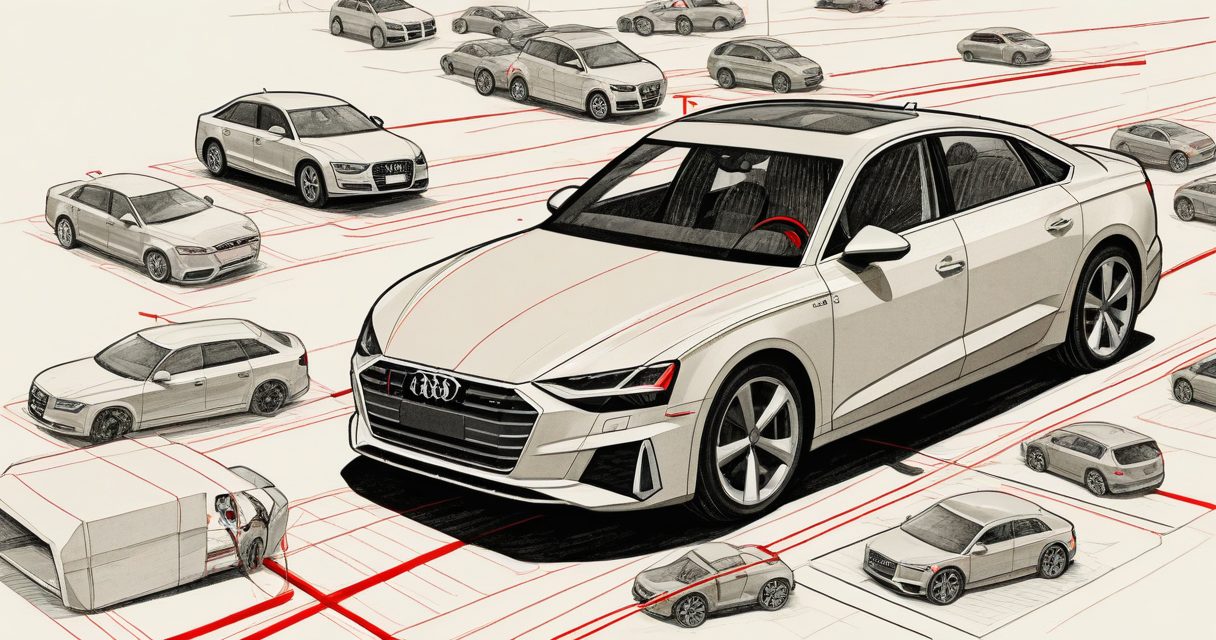
A connected vehicle is not a car with an app attached. It is a remote-access endpoint with steering, telemetry, location, and identity wired into a consumer authentication flow. The myAudi application sits inside that flow. Any weakness in the app, the supporting API, or the identity layer behind them maps directly onto a physical asset that moves, carries people, and reports its position continuously.
The security position for Audi Connected Vehicle is therefore not an app security position. It is an identity and trust boundary position. The mobile client is the user-facing surface. The control plane is whatever set of APIs, token services, and vehicle backends sit behind it. Whoever holds a valid session against that control plane holds a degree of control over the vehicle and the data the vehicle produces. The specific scope of that control in the Audi stack is not confirmed from the topic input alone and must be treated as a variable, not a constant.
From an attacker perspective, this stack is high value and low friction. High value because the asset combines real-time location, in-cabin data, account identity, and remote command primitives. Low friction because the entry path is a consumer mobile app, distributed publicly, reverse engineered easily, and tied to credentials users reuse across other services. The work needed to enumerate the attack surface is the work needed to read the app, observe its traffic, and probe the API behind it. None of that requires proximity to the vehicle.
The original assumption around vehicle security was physical. The boundary was the key, the door, and the immobiliser. Access required presence. Compromise required tools, time, and exposure. Trust was bounded by who could reach the car. That model was coherent because the control plane lived inside the vehicle.
The assumption carried forward into the connected era was that adding a companion app extends convenience without changing the boundary. The user authenticates once, the app talks to the vehicle through a manufacturer backend, and the vehicle continues to behave as if the physical boundary still applies. Under that assumption, the app is treated as an accessory. Security review is scoped accordingly. Threat modelling focuses on the vehicle bus, the head unit, and the radio interfaces, with the app and its API treated as a thin layer on top.
That assumption does not hold once the control plane moves off the vehicle. The moment remote commands, location reporting, and account-bound services traverse a cloud API, the boundary is no longer physical. It is the authentication and authorisation logic of that API. The myAudi app is not the boundary. The token issuance, session validation, and authorisation checks behind it are. Whether those checks are enforced consistently across every endpoint, every vehicle-bound action, and every account state is the only question that matters. Where enforcement is partial, the boundary is partial. Where enforcement is not confirmed, the boundary is not confirmed.
What changed is the location of the control plane and the identity of the operator. The vehicle no longer trusts only the key. It trusts an account. The account is held by a user, secured by a password, optionally a second factor, and represented to the backend by tokens issued to a mobile client. Every remote function the connected experience exposes is gated by that account state, not by physical possession. The attack surface expanded from the vehicle to the entire identity stack supporting it.
This changes the cost structure for an attacker. Physical attacks scale linearly. One car, one attempt. Identity attacks scale through automation. Credential stuffing, token theft, session replay, API enumeration, and account takeover techniques developed against banking, retail, and SaaS platforms apply directly to a connected vehicle account in the same form. The specific resilience of the myAudi authentication flow against these techniques is not confirmed from the input. The relevant point is structural. A consumer authentication flow inherits a consumer threat model, regardless of what asset sits behind it.
The second change is data exposure. A connected vehicle reports location, trip history, and account-linked telemetry to the backend by design. That data exists whether or not the user invokes a remote command. Compromise of the account, the API, or any system holding that telemetry exposes movement patterns tied to a named identity. The specific data fields retained, retention windows, and access controls inside the Audi backend are not confirmed. What is confirmed by the architecture is that location and identity are co-located in a cloud system reachable over the public internet, and that the protection of that data is now a software control problem, not a physical one. Controls that are not enforced are not controls. Identity is the boundary. The myAudi experience is the surface where that boundary is tested.
The failure mechanism in a connected vehicle stack is not a single bug. It is a drift in where trust is enforced. The app is built and tested as consumer software. The backend is operated as a consumer platform. The asset behind both is a vehicle. When the engineering posture matches the front end and not the asset, every control inherits the lower threshold. Token lifetime is set for user convenience. Session binding is loose so users do not get logged out. Account recovery is optimised to reduce support load. Each of those decisions is reasonable for a retail app. Each becomes a control gap when the session it issues can address a vehicle.
The specific enforcement characteristics of the myAudi authentication flow, its token scoping, its session binding to device, its rate limiting on identity endpoints, and its authorisation checks at the vehicle command layer are not confirmed from the input. What is structurally fixed is that the app speaks to an API, the API speaks to vehicle backends, and the chain of trust between those layers is software. Wherever that chain validates identity once and propagates the result without re-checking at the next hop, the boundary collapses to the weakest link. A valid token at the edge becomes implicit authority at the core. That is the drift. It is not a bug. It is a design posture that scales the consumer model onto a physical asset.
The second drift sits in the data plane. Telemetry is collected because the product requires it. Location, trip history, and vehicle state are written to backend stores tied to account identity. Access to those stores is governed by internal authorisation. The presence, scope, and enforcement of that authorisation in the Audi environment are not confirmed. What is confirmed by the architecture is that the data exists, it is keyed to a named user, and it is reachable through software paths. Any failure in those paths, whether at the API, the storage layer, an internal service, or a third party with delegated access, exposes the data at the granularity it was collected. Controls that are not enforced at every hop are not controls. They are assumptions.
The pattern is not specific to Audi and not specific to vehicles. It repeats wherever a physical asset is bound to a consumer account through a cloud API. Smart locks, garage doors, residential alarm panels, and EV charging hardware all share the same structural property. The boundary is no longer the device. The boundary is the identity layer that addresses the device. The asset trusts the cloud. The cloud trusts the token. The token trusts the login. The login trusts whatever the user used to set up the account. Each layer inherits the trust posture of the layer beneath it. The weakest link defines the system.
The banking sector encountered the same structural shift and was forced to respond because the loss event was immediate and financial. Step-up authentication, device binding, transaction signing, and per-action authorisation became standard because every weak control produced measurable fraud. Connected vehicle stacks sit in a different loss model. The loss event for a compromised account is not always a transaction. It can be surveillance, location tracking, unauthorised remote function use, or downstream identity abuse using data harvested from the account. These losses are harder to attribute and slower to surface. That slower feedback loop is what allows the consumer authentication posture to persist on assets that warrant a stronger one. The mechanism is the same. The pressure to fix it is not.
The parallel extends to the supply chain behind the experience. Mobile clients integrate SDKs. Backends integrate analytics, mapping, telemetry processing, and partner services. Each integration is a trust delegation. Each delegation is a place where identity-linked data can leave the primary boundary. The specific third party integrations inside the myAudi experience and the data shared with each are not confirmed from the input. The structural point holds without that detail. A connected vehicle experience is a composite system. The protection of identity and location data is only as strong as the weakest party in that composition, and the user has no visibility into which parties are involved.
A connected vehicle account is a remote access credential to a physical asset that carries a person and reports their location. It must be treated that way at every layer that handles it. Password plus optional second factor is the floor, not the ceiling. Session tokens must be bound to device, scoped narrowly, and revalidated at the action layer, not only at the edge. Vehicle commands must require authorisation checks that do not rely on the assumption that a valid session implies a valid intent. Whether the myAudi stack meets that bar at every endpoint is not confirmed. The bar itself is not negotiable, because the asset is not negotiable.
Location and trip data tied to a named identity is sensitive data. It is sensitive on collection, sensitive in storage, and sensitive in transit between internal services and external partners. Retention must be bounded by purpose. Access must be logged and reviewed. Exposure of that data through an account compromise, an API flaw, or a partner failure is a safety event, not only a privacy event. The threat model for that data must reflect that. If it does not, the control posture is misaligned with the impact profile of the asset.
Identity is the boundary. The vehicle no longer protects itself. The app does not protect the vehicle. The API and the identity layer behind it do, or they do not. Whoever holds a valid session against that control plane holds the access the session was issued for. The work for Audi, and for every manufacturer operating a connected vehicle experience, is to make that statement uncomfortable to read by ensuring that valid session means narrowly scoped, continuously validated, device bound, and authorisation checked at every action. Anything less is a consumer authentication posture on a physical asset. That gap is the attack surface. It will be used.
Keep Reading
 github security
Baseten lost production GitHub admin in 25 minutes
Admin access to Baseten's production GitHub was reached in 25 minutes. A briefing on the identity boundary that failed and what the number means.
 iPhone Duo
iPhone Duo is not a convenience feature
iPhone Duo's shared access and multi-device authentication expand who can authenticate and access, collapsing resource security to the weakest device and party.
 credential theft
CVE-2026-44843 turns one chat message into credential theft
CVE-2026-44843 turns a single chat message into credential loss. An operator breakdown of the one-hop path from unauthenticated input to identity material.
Latest on the Wire
Full wire →- 3Blue1Brown: As AI Cracks Proofs, Math Must Reward 'Motivated Explanations'Hacker News
- A Rust veteran ports a JSONPath library to Zig — and rethinks his habitsHacker News
- AI Model Reportedly Cracks an Unsolved 1918 German ADFGVX CipherHacker News
- Beating Chrono Trigger's Dream Devourer With an Integer OverflowHacker News
New signal daily · RSS
Stay in the loop
New writing delivered when it's ready. No schedule, no spam.